China to Malaysia Air Freight: Transit Times & Costs – A Comprehensive How-to Guide for Small Business Owners
In an era where speed and reliability dictate the pace of business, shipping from China to Malaysia is a vital strategy for small business owners looking to maintain competitive advantages through efficient, cost-effective supply chains. As China remains Malaysia’s paramount trading partner—with bilateral trade nearing $200 billion in 2023 (Malaysian Ministry of International Trade and Industry)—demand for China to Malaysia air freight solutions is higher than ever.
Yet, air cargo is a nuanced domain. You might grapple with questions like: How fast can goods reach my warehouse? What’s the actual investment? How do I minimize risks and errors? This in-depth, actionable guide clarifies the ins and outs of import from China Malaysia via air, highlighting expert tips, real stories, and step-by-step support to help small businesses fly ahead of the competition.
Table of Contents
- Why Choose Air Freight From China to Malaysia?
- Transit Times: What to Expect
- Air Freight Costs: Detailed Breakdown
- Step-by-Step: How to Ship from China to Malaysia by Air
- Key Factors Impacting Transit Time and Cost
- Choosing the Right Air Freight Forwarder
- Essential Documentation and Customs Tips
- Common Challenges & How to Overcome Them
- Real-World Success Stories and Anecdotes
- Frequently Asked Questions (FAQs)
- Conclusion: Making Air Freight Work for Your Business
1. Why Choose Air Freight From China to Malaysia?
The Value of Speed and Reliability
For Malaysian importers and SMEs, speed, consistency, and safety stand out as top priorities. Air freight from China is the logical solution if you need your goods to arrive within days rather than weeks.
- Speed: Sea freight can take 10–21 days (or longer during peak periods or weather events), while air cargo can deliver in 1–7 days, depending on service levels.
- Reliability: Airlines maintain meticulous schedules; delays due to port congestion or weather are less common compared to sea shipments.
- Security: Airport operations are stricter—with enhanced surveillance and regulated handling—which dramatically reduces risks of theft and damage.
Statistical Insight
According to IATA (2022), although air freight represents less than 1% of total global cargo volume, it carries around 35% of global trade value. This shows how essential air cargo is for high-value or time-sensitive products.
Scenarios Favoring Air Freight
Case Example 1: Fast Fashion Retailer
Consider Jasmine, who runs a boutique in Kuala Lumpur specializing in fast-paced fashion cycles. She receives her new season’s collection from a manufacturer in Guangzhou. Express air freight ensures she’s first-to-market, capturing early demand. Despite spending more per kg, her profit margin swells due to increased sales velocity.
Case Example 2: Electronics SME
Rahim deals in computer peripherals and needs to replenish stock for a tech conference in Penang. Shipping by sea risks missing the event. Air cargo delivers within 3 days, allowing him to showcase the latest models and secure corporate orders.
Pros of Air Freight for SMEs
- Rapid restocking for popular items
- Reliability for meeting promotional or contractual deadlines
- Protection for delicate or high-value merchandise (electronics, luxury goods, precision tools)
- Essential for perishable items (food samples, flowers, pharmaceuticals)
- Real-time tracking and robust customer service from most major carriers
When Air Freight Is Ideal
- Urgent, high-value shipments below 1,000 kg
- Launches or promotional campaigns with fixed timeframes
- Perishable, seasonal, or sensitive products where late delivery destroys value
- Product samples or prototypes requiring swift feedback cycles
In all these cases, air cargo China Malaysia gives you a crucial speed advantage.
2. Transit Times: What to Expect
Standard Air Freight vs. Express Air Freight
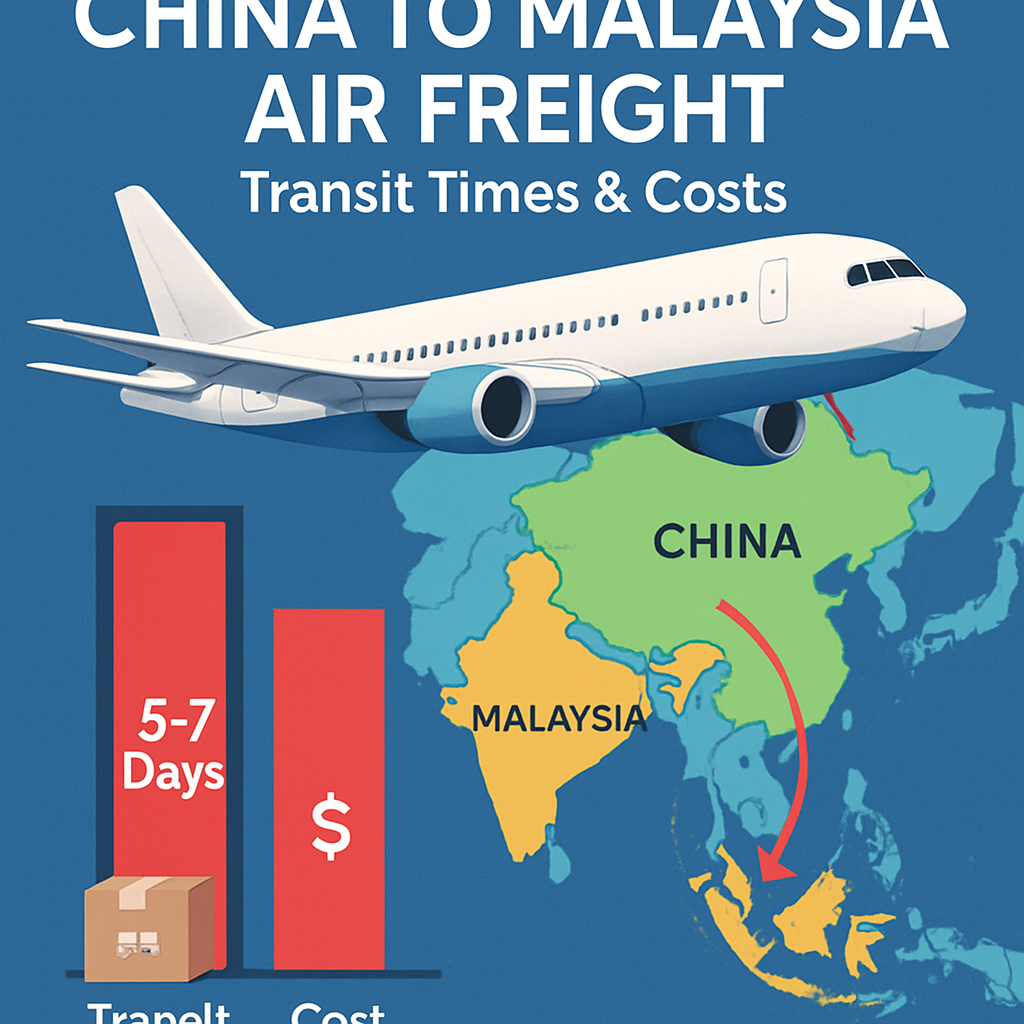
- Standard Air Freight: 3–7 days door-to-door; best for reasonably urgent, cost-sensitive shipments.
- Express Air Freight (Courier): 1–3 days, door-to-door; ideal for urgent samples, documents, or high-priority stock.
Comparison Table
| Air Freight Type | Transit Time (Door-to-Door) | Example Carriers | Use Case |
|---|---|---|---|
| Standard Air Freight | 3–7 days | MASkargo, China Southern, Cathay Pacific | General cargo, retail replenishments |
| Express (Courier) | 1–3 days | DHL Express, FedEx, UPS, SF Express | Urgent samples, event-driven stock |
Practical Flight Routes & Timelines
- Beijing → Kuala Lumpur (KLIA): Direct flights available; typical total transit of 3–4 days including customs processing.
- Guangzhou → Penang: Strong connectivity; usually 2–5 days total, often used for electronics and textiles.
- Shanghai → Kuala Lumpur/Penang: 3–6 days (quicker if flights are direct and paperwork is pre-cleared).
What Impacts Actual Delivery Times?
- Consolidation Delays: Standard air sometimes waits for enough cargo to fill a container (ULD), slightly prolonging total time.
- Customs Clearance: Accuracy of paperwork and completeness significantly affect speed.
- Time of Booking: Late-day bookings might not catch that day’s flight.
- Last-Mile Delivery: Some forwarders offer immediate transfers; others store cargo until pick-up.
Industry Example
A Selangor-based auto parts distributor used express air for the urgent import of customized sensors from Shanghai. Thanks to pre-arranged customs clearance, total door-to-door time was under 48 hours—critical to avoid production line stoppages.
Tips for Faster Shipments
- Always opt for direct flights if possible.
- Submit all documentation electronically, in advance.
- If on a strict timeline, choose handlers who pre-clear customs.
Key Takeaways:
- Air freight is unbeatable for high-value, urgent, or time-sensitive shipments.
- Costs can be controlled via smart planning—consolidation, off-peak booking, and choosing the right forwarder.
- Documentation accuracy and proactive compliance are non-negotiable for avoiding costly delays.
- Real-world agility—adapting with reliable partners and flexible solutions—can help your business survive and thrive amidst logistics challenges.
Ready to take control of your supply chain? Reach out for tailored air freight quotes and set your business on a trajectory for global success. With the right strategies, your next opportunity is just a flight away.