Shipping from China to Malaysia by Sea: Step-by-Step Guide
Shipping goods internationally can seem daunting, especially for small business owners venturing into new markets. As China continues to dominate global manufacturing, Malaysia has emerged as one of its key trading partners in Southeast Asia. If you’re planning to handle shipping from China to Malaysia, understanding the ins and outs of China to Malaysia sea freight is essential for successful imports.
This in-depth, step-by-step guide is your go-to resource for mastering sea cargo from China to Malaysia. You’ll learn about optimal shipping routes, documentation, budgeting, risk management, and customs clearance. Packed with practical examples, actionable tips, and real-world case studies, this article will help small business owners import from China to Malaysia confidently and cost-effectively.
Why Choose Sea Freight from China to Malaysia?
Sea freight is the lifeblood of global commerce. According to the United Nations Conference on Trade and Development (UNCTAD), nearly 80% of global merchandise trade by volume is transported by sea. Shipping from China to Malaysia via sea freight makes perfect sense for small businesses aiming for flexibility, affordability, and reliability.
Key Advantages of China to Malaysia Sea Freight
- Cost Efficiency: Sea freight is 4–6 times cheaper than air freight for large, bulky, or heavy shipments, which is crucial for small businesses watching their margins.
- Heavy & Large Shipments: Sea containers (20ft or 40ft) accommodate everything from raw materials and machinery to finished goods and consumer products.
- Flexible Container Options: Whether your cargo fills a container (FCL) or only needs a fraction (LCL), there’s a solution tailored to your business scale.
- Environmentally Responsible: Sea cargo operations have a significantly lower carbon footprint per kilogram than air freight, making them more sustainable.
- Direct, High-frequency Routes: Major Chinese ports offer regular, frequent sailings to Malaysian ports, minimizing wait times and providing reliability in scheduling.
Real-World Spotlight
Case Example:
In 2023, Rina, an entrepreneur importing recyclable packaging, saved over 70% in shipping costs by choosing sea cargo over air freight for her monthly shipments from Ningbo to Port Klang. She was able to reinvest these savings into marketing, helping her business scale more rapidly.
Overview of Shipping Routes and Major Ports
For China to Malaysia sea freight, efficient route planning is fundamental. Both nations boast world-class ports connected by busy shipping lanes.
Major China-Malaysia Shipping Routes
The standard journey for sea cargo China Malaysia usually involves:
- Cargo leaves a major Chinese port (e.g., Shanghai, Shenzhen, Ningbo, Guangzhou)
- Travels through the bustling Malacca Strait
- Arrives at a Malaysian destination port (typically Port Klang, Penang, or Johor)
Major Chinese Ports
- Shanghai Port: The world’s busiest container port, offering robust services for virtually all freight types.
- Shenzhen Port: Ideal for electronics, textiles, and general goods; closer to many Guangdong manufacturers.
- Ningbo-Zhoushan Port: Efficient for industrial goods and bulk cargo.
- Guangzhou Port: A primary hub for machinery and manufactured products.
Major Malaysian Ports
- Port Klang: Malaysia’s largest and busiest port, serving the Klang Valley and handling most import from China Malaysia traffic.
- Penang Port: Strategic for northern Malaysian businesses and industries.
- Johor Port & Tanjung Pelepas: Convenient for businesses in the south and close to Singapore for regional redistribution.
Sea Freight Transit Times
- Shanghai to Port Klang: Approx. 8–13 days
- Shenzhen to Port Klang: Approx. 7–12 days
- Ningbo to Penang: Approx. 9–16 days
Note: Seasonal demand, carrier schedules, and global events (e.g., port congestion, weather) can affect transit times.
Example in Action
Case Study:
Jenny, owner of a home decor store in Penang, times her shipments from Shekou port, Shenzhen, to align with her store’s new collection launches. With a transit schedule of 10 days, she builds a buffer of 5 days to cover customs clearance and inland transport, ensuring her shelves are always stocked on launch day.
Types of Sea Freight Solutions: FCL vs. LCL
Understanding shipment options is critical when optimizing your import-from-China-Malaysia logistics.
Full Container Load (FCL)
What Is FCL?
- Rent an entire shipping container exclusively for your goods.
- Common sizes: 20-foot (28–30 m³ capacity) and 40-foot (58–60 m³ capacity).
When to Choose FCL?
- You have a large volume of product—either filling a container or enough to justify the cost.
- You want to minimize the chance of cargo mix-ups or damage.
- Faster and simpler customs clearance since only your goods are in the container.
Practical FCL Example
A Penang-based electronics wholesaler imports 600 flat-panel TVs in one shipment. FCL makes sense due to volume, and her forwarder secures a 40ft container, reducing damage risk and streamlining customs.
Less than Container Load (LCL)
What Is LCL?
- Share a container with shipments belonging to other businesses—pay only for the space (in CBM) you use.
When to Choose LCL?
- Lower volume or starting small—ideal for startups or those testing new products.
- Buying in smaller, more frequent batches to minimize working capital tied up in inventory.
LCL Success Story
Real Example:
Daud, a fashion boutique owner in Kuala Lumpur, only imports 2 CBM of garments each quarter. By leveraging LCL, he pays only for the space he needs and still enjoys reliable transit, albeit with an extra day or two for container consolidation and deconsolidation.
FCL vs. LCL Quick Comparison Table
| Feature | FCL | LCL |
|---|---|---|
| Cost Structure | Fixed per container | Per CBM |
| Risk of Damage | Lower (your goods only) | Higher (shared container) |
| Customs Clearance | Faster, simpler | Slightly longer |
| Flexibility | High for bulk shipments | High for small shipments |
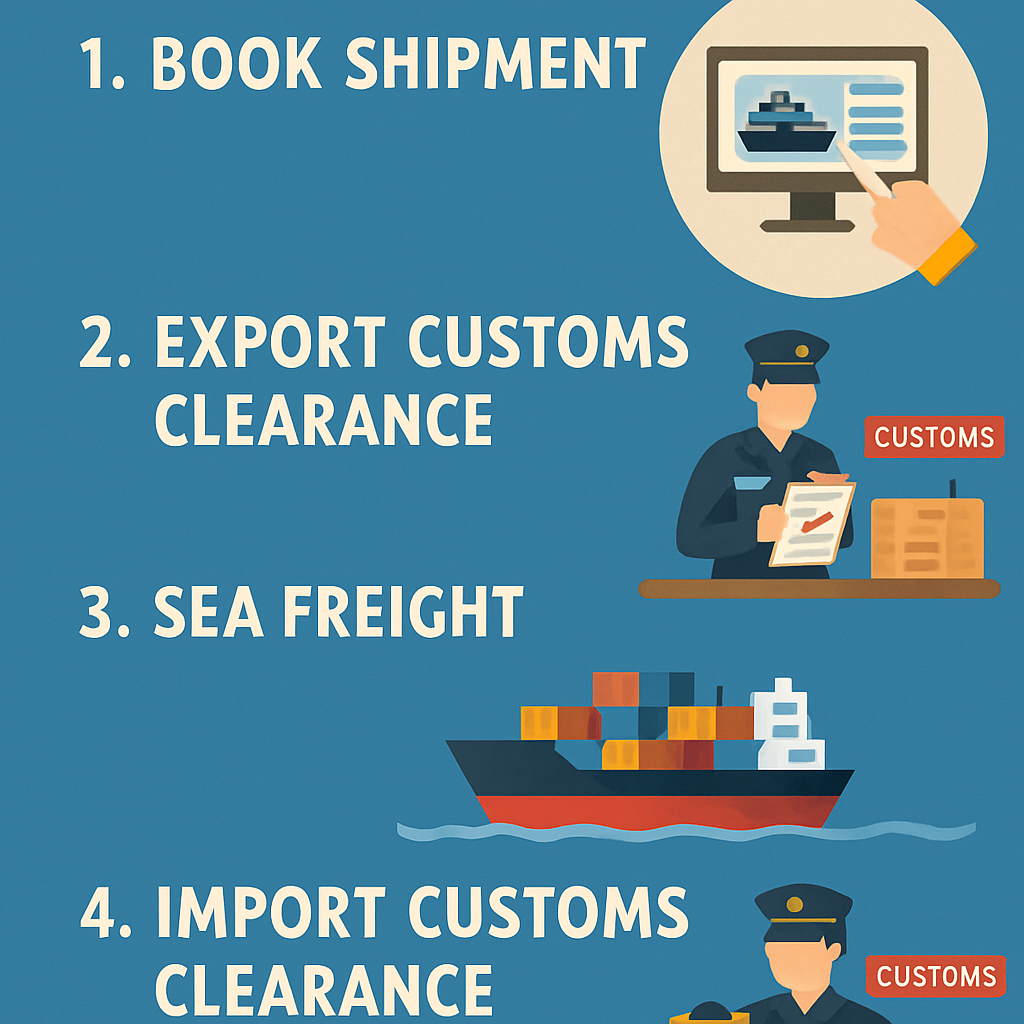
Step-by-Step Process for Sea Cargo China Malaysia
Navigating China to Malaysia sea freight becomes manageable when you follow a structured approach. Here’s a comprehensive step-by-step guide tailored for small businesses.
Step 1: Research and Plan Your Import
a. Identify Reliable Suppliers
- Explore trusted platforms like Alibaba, Made-in-China.com, or Global Sources.
- Request recent certifications and references.
- Ask for video factory tours or conduct third-party audits for higher-value orders.
b. Define Shipment Volume and Sea Freight Method
- Calculate expected order volume per shipment.
- Discuss with your supplier if your volume favors FCL or LCL.
- Small businesses can champion LCL to reduce upfront investment risks.
c. Prepare a Cost and Timeline Estimate
- Product cost (ex-works or FOB price)
- Freight charges (get quote for both FCL and LCL)
- Customs duties and taxes (using Malaysian HS Code lookup)
- Insurance premium (usually 0.3–0.5% of cargo value)
- Domestic transport (from destination port to your premises)
Example Cost Breakdown (for LCL, 2 CBM shipment):
| Cost Item | Estimate (USD) |
|---|---|
| Product Cost | $2000 |
| Sea Freight (LCL) | $180 |
| Insurance | $10 |
| Customs Duty & Tax | $100 |
| Local Delivery | $70 |
| Total | $2360 |
Note: Costs vary by market rates, cargo type, and peak/off-peak seasons.