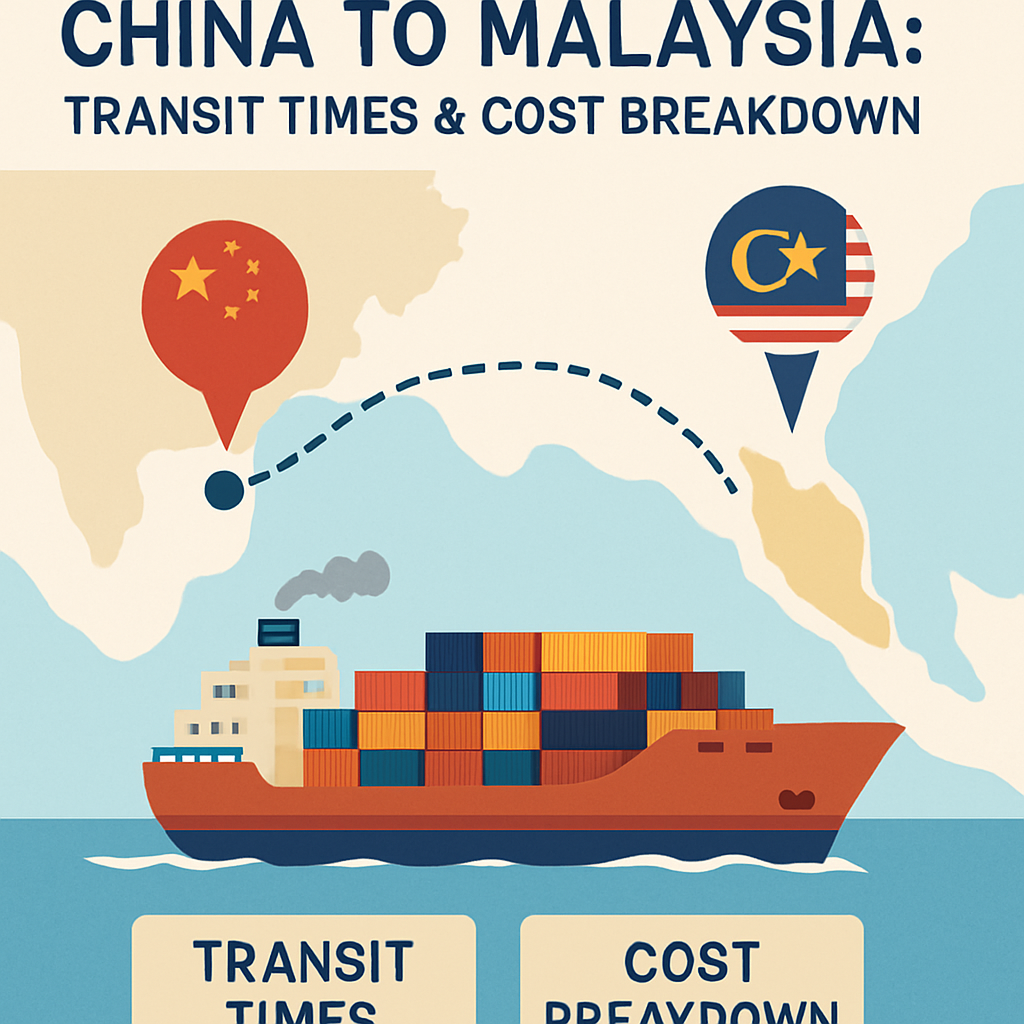
Sea Freight from China to Malaysia: Transit Times & Cost Breakdown
Introduction
In today’s interconnected world, global supply chains play a pivotal role in the growth and sustainability of businesses, especially for small business owners sourcing goods internationally. Among Malaysia’s top trading partners, China stands as a powerhouse of manufacturing, making China to Malaysia sea freight an essential pillar for importers aiming to balance cost, efficiency, and reliability.
Sea freight is the linchpin of international cargo movement for bulk shipments and is often the linchpin that allows businesses to remain competitive. However, the cost-effectiveness of ocean freight from China to Malaysia can seem complex due to the web of transit options, varying schedules, and a multitude of hidden charges. In this article, we’ll provide a thorough breakdown of the full sea freight process, make direct comparisons against alternative modes, explain the factors influencing rates and transit times, and share real-world experiences from small business owners who have mastered container shipping to Malaysia.
Whether you’re new to international trade or seeking to optimize and scale up your importing practices, let this comprehensive guide unlock actionable insights to make every shipment more efficient and cost-effective.
Table of Contents
- Why Choose Sea Freight from China to Malaysia?
- Key Shipping Ports in China and Malaysia
- Types of Sea Freight Services
- Full Container Load (FCL)
- Less Than Container Load (LCL)
- Specialized Container Types
- Sea Freight Transit Times: What to Expect
- Cost Breakdown: Ocean Freight from China to Malaysia
- Case Studies: Real-World Import Success Stories
- Comparing Sea Freight versus Other Shipping Modes
- Factors Affecting Sea Freight Costs
- Step-by-Step Guide: Booking Sea Freight
- Practical Tips for Efficient Container Shipping
- Conclusion
- FAQs
1. Why Choose Sea Freight from China to Malaysia?
Understanding the reasons for the widespread popularity of sea freight between China and Malaysia is important for effective logistics planning.
Advantages of Sea Freight
- Cost Efficiency: Sea cargo is the backbone of global trade due to its unbeatable cost-per-unit price, particularly effective for large volumes or heavy items. For example, shipping 20 tons of ceramic tiles by air may cost over $40,000, while sea freight can deliver comparable goods for less than $2,500 port-to-port.
- Mass Capacity: Bulk orders, machinery, vehicles, or even entire production lines can be shipped securely via container ships. No other transport mode can match these mass capacities.
- Diverse Cargo Handling: Ocean freight from China to Malaysia can handle a vast array of goods: from apparel and toys to industrial equipment and perishable foods using specialized containers.
- Sustainability: With lower carbon dioxide emissions per ton moved compared to air cargo, sea freight supports sustainable business practices.
- Customizable Solutions: Flexible consolidation options (LCL) and dedicated containers (FCL) mean you can optimize shipping based on your order size, frequency, and supply chain needs.
Drawbacks and Considerations
- Longer Transit Times: Sea transport is slower compared to air; a typical Shanghai–Port Klang journey can take 8–14 days, while air freight is usually completed in under two days.
- Complex Documentation & Customs: Handling bills of lading, customs declarations, and letters of credit may seem daunting for beginners.
- Potential Delays: Weather, strikes, or peak season congestion can disrupt planned schedules.
Quick Comparison Table: Sea vs. Air Freight Costs (Shanghai to Kuala Lumpur)
| Freight Type | 1000 kg (1 m³) | 10,000 kg (10 m³) |
|---|---|---|
| Air Freight | ~$6,000 | ~$42,000 |
| Sea Freight (LCL) | ~$350 | ~$3,500 |
| Sea Freight (FCL) | ~$1,300 (20ft) | ~$1,500 (20ft) |
(2024 Average Quote Data)
Testimonial Example:
Siti, a Penang boutique owner, shares:
"Switching to sea freight slashed my shipping costs by 65%. While it forced me to plan ahead and adjust inventory cycles, the savings allowed me to double my product range and stay price-competitive."
2. Key Shipping Ports in China and Malaysia
Efficient sea cargo from China to Malaysia hinges on optimizing port selection. The right port pairing can shave days from transit and limit unnecessary trucking.
Top Chinese Export Ports
- Shanghai: Ranked the world’s largest port by throughput, it offers frequent deep-sea connections and competitive rates.
- Shenzhen: favored by electronics and garment exporters; proximity to factory clusters in Guangdong speeds up consolidations.
- Ningbo-Zhoushan: Specializes in heavy industry and bulk goods; strategically links developed eastern China to global routes.
- Guangzhou: Leading for automotive and chemical cargo; the region’s road infrastructure enables fast factory-to-port deliveries.
- Qingdao: Notably strong in food exports, furniture, and machinery.
Malaysian Import Ports
- Port Klang: Handles close to 50% of Malaysia’s import/export sea volume. Located 38 km from Kuala Lumpur, it boasts modern automation and value-added services, making it a preferred entry point for most FCL imports.
- Penang Port: Northern Malaysia’s primary gateway, popular with small-to-mid businesses importing electrical goods, textiles, and consumer products.
- Johor Port and Port of Tanjung Pelepas: Southern Malaysia’s key logistics hubs; often utilized for Singapore-bound transshipments and Iskandar zone supplies.
Example: Optimizing Route by Port Location
If your supplier is in Shenzhen and your warehouse is in Johor Bahru, shipping direct from Shenzhen to Johor Port is faster and reduces inland haulage fees, compared to routing through Shanghai or Port Klang.
3. Types of Sea Freight Services
China to Malaysia sea freight offers several shipping formats—tailored to your cargo size, urgency, and handling requirements.
Full Container Load (FCL)
What Is FCL?
Shipping goods that fill (or nearly fill) a 20-foot or 40-foot container, reserved exclusively for your shipment. Standard FCLs can handle up to 28 cbm (20ft) or 58 cbm (40ft).
FCL Benefits
- Dedicated use, reducing cross-contamination or damage from co-located goods.
- Faster transit, as containers are sealed at the factory and opened only at the destination.
- Predictable pricing: Flat fee regardless if container isn’t fully loaded.
Less Than Container Load (LCL)
What Is LCL?
A consolidation method allowing multiple shippers to share a single container. You pay by actual volume (measured in cbm), making it ideal for lower-volume orders (typically from 1 cbm up to about 15 cbm).
LCL Pros and Cons
Pros:
- Allows small business owners to import as needed without overstocking.
- Great for sample lots, new product launches, or seasonal top-up orders.
Cons:
- Subject to possible delays due to consolidation and deconsolidation.
- Slightly increased risk of cargo mishandling as goods are moved multiple times.
Specialized Container Types
- Reefer (Refrigerated) Containers: Necessary for fruits, frozen seafood, pharmaceuticals—maintains required temperatures throughout.
- Flat Rack/Open-Top Containers: Needed for machinery, vehicles, and oversized cargo.
- Tank Containers: For bulk liquids, chemicals, or food-grade oils.
Case Example: Choosing the Right Service
A Perak-based organic tea supplier ordered 8 cbm in custom packaging. Their forwarder recommended LCL, saving around $1,200 over booking a full 20’ container, despite a slightly longer consolidation period.
4. Sea Freight Transit Times: What to Expect
Transit time is influenced by the route, port congestion, shipping line, and whether you use direct or transshipment connections.
Average Port-to-Port Sea Freight Transit Times
| Route | FCL (Direct) | LCL (with Consolidation) |
|---|---|---|
| Shanghai – Port Klang | 8–12 days | 12–16 days |
| Ningbo – Penang | 10–14 days | 14–18 days |
| Guangzhou – Johor | 8–13 days | 12–17 days |
| Shenzhen – Port Klang | 7–11 days | 11–15 days |
Variables That Affect Delivery Time
- Vessel Routing: Direct services are faster but may be more expensive; indirect or feeder routes stop at other ports and take longer.
- Port Congestion: Pre-Chinese New Year or global crises extend waiting times.
- Customs and Clearance: Incomplete paperwork or inspections can add unplanned delays.
Real Example: Managing Peak Season Delays
Fadzli, an electronics importer, routinely imports via LCL from Shenzhen to Port Klang. Over Chinese New Year, his cargo was delayed by five days. The root cause? Increased volumes at both origin and destination ports, and longer customs inspection times.
Pro Tip: Importers facing tight deadlines should avoid shipping in the two weeks prior to major Chinese holidays or secure bookings at least four weeks in advance.
5. Cost Breakdown: Ocean Freight from China to Malaysia
Understanding sea freight cost components empowers small business owners to make informed decisions and prevent financial surprises.
Key Cost Elements
- Ocean Freight Rate (Main Leg)
- Varies based on route, container size, and season.
- Example: FCL 20ft Shanghai–Port Klang in June 2024: $1,300–$1,700.
- Origin Port Charges (China)
- Export customs: $80–$120
- Trucking from factory to port: $100–$350 (Shenzhen less, inland factories more)
- Cargo handling/documentation: $50–$150
- Destination Charges (Malaysia)
- Terminal Handling: MYR 350–700 per container
- Import documentation and admin: MYR 150–250
- Inland delivery (to Kuala Lumpur, Penang, etc.): MYR 200–1,000, based on zone and truck type
- Additional Fees
- Insurance: 0.1%–0.3% of cargo value (essential for higher-value shipments)
- Surcharges: Peak season charges, fuel adjustments, security fees, war risk premiums
LCL Cost Example
- Volume: 3.5 cbm of homeware from Ningbo to Penang
- Quote:
- Freight + consolidation: $160
- Local charges: $210 (origin + destination)
- Insurance: $8 (cargo value $2,500)
- Total: ~$378 (approx. MYR 1,747 at June 2024 rates)
FCL Cost Example
- 1×20’ FCL (25 cbm) of imitation jewelry, Shenzhen–Port Klang
- Ocean freight: $1,450 (~MYR 6,770)
- Export charges: $240 (~MYR 1,120)
- Port Klang charges: $320 (~MYR 1,495)
- Local transport: $220 (~MYR 1,027)
- Insurance: $110 (~MYR 513)
- Total: ~$2,340 (~MYR 10,925)
Price Fluctuation Factors (2022–2024)
- Cases of surcharges doubling base freight rates during Covid-related disruptions and Suez Canal blockages.
- Relief in mid-2023 as new shipping lines and vessels entered the market, creating more competitive quotes.
6. Case Studies: Real-World Import Success Stories
Case Study 1: LCL for Small-Scale Electronics
Business: Kuala Lumpur-based online retailer of Bluetooth speakers
Order: 2.8 cbm (780kg), Ningbo to Port Klang
Challenge: High air freight quotes made the consignment unprofitable.
Solution: Used LCL, splitting the container with another local importer.
Result: Saved $1,100 versus air, improved margins by 35%, delivery in 13 days.