# Common Import Mistakes When Shipping from China to Malaysia: A Comprehensive How-to Guide for Small Business Owners
Importing goods from China to Malaysia presents a world of opportunities for small business owners, offering access to affordable products, cutting-edge technology, and the massive Chinese manufacturing ecosystem. With China exporting over $3.36 trillion worth of goods globally in 2022, and Malaysia importing over $91.3 billion of Chinese products (Statista, 2023; UN Comtrade, 2023), China-Malaysia trade is a lucrative pathway for SMEs looking to scale.
However, the road from negotiating with suppliers to having your goods cleared in Malaysia is riddled with challenges. Common mistakes—ranging from overlooked paperwork to overlooked shipping risks—can lead to delays, fines, added expenses, or even outright loss of shipments. This exhaustive how-to guide explores the most frequent China to Malaysia import mistakes, with actionable advice, relevant case studies, and a clear roadmap to help small business owners navigate the process confidently.
Table of Contents
- Understanding the China-Malaysia Import Landscape
- Top China to Malaysia Import Mistakes
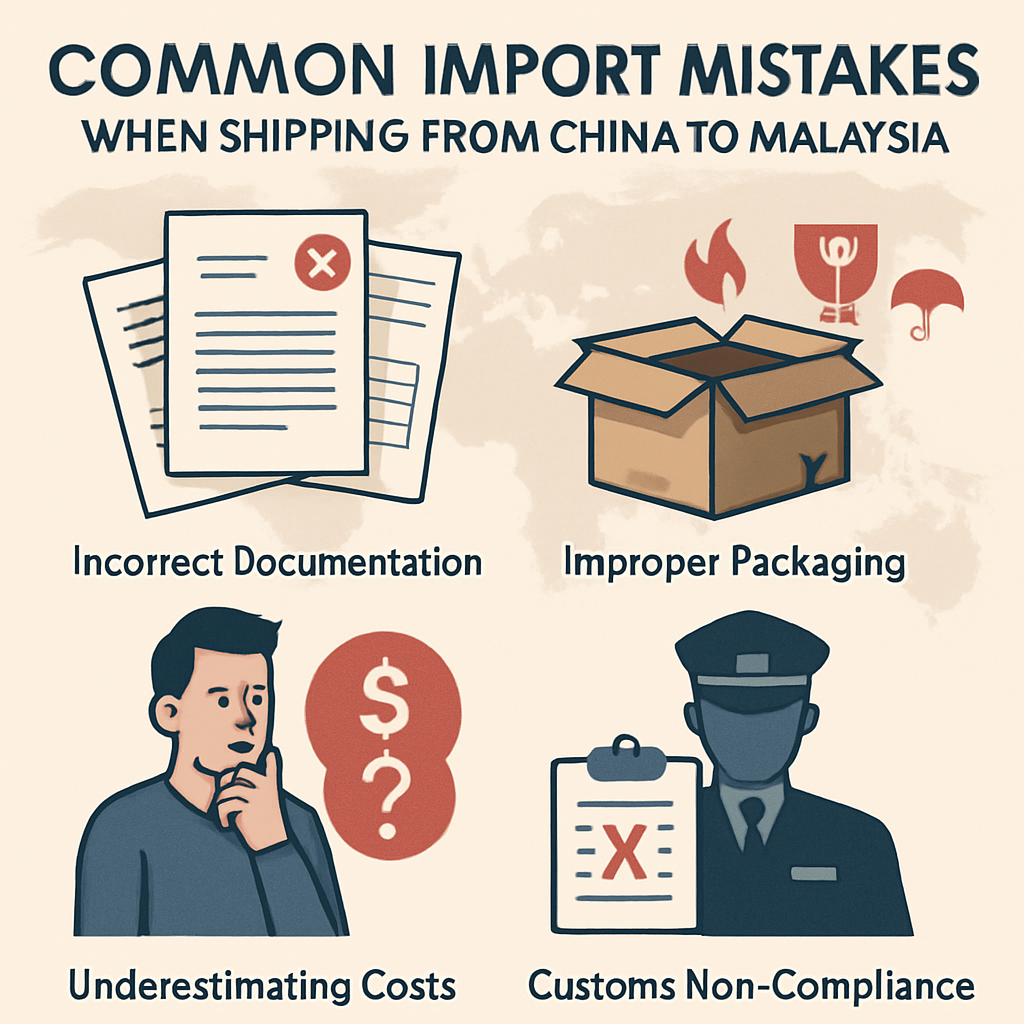
- Incomplete or Incorrect Import Documentation
- Overlooking Malaysian Customs Rules and Prohibited Items
- Incorrect Product Descriptions or HS Codes
- Poor Packaging, Handling, and Labeling
- Miscalculating Costs & Ignoring Hidden Charges
- Selecting the Wrong Shipping Method
- Underestimating Malaysian Customs Clearance Complexities
- Related Subtopics Worth Considering
- Working Effectively With Shipping Agents & Freight Forwarders
- Understanding Incoterms in China-Malaysia Trading
- Managing Insurance for Imported Goods
- Case Studies & Anecdotes
- Practical Tips: A Step-by-Step Checklist
- Conclusion: Avoiding Costly Mistakes for Smoother Imports
- FAQs
Understanding the China-Malaysia Import Landscape
Malaysia is a strategic destination in global trade, with its thriving ports, robust logistics infrastructure, and role as China’s third-largest trading partner in ASEAN. Its bustling economy relies on products like machinery, electronics, textiles, plastics, furniture, electrical appliances, and household goods from China. For small businesses in Malaysia, participating in this trade unlocks global competitiveness.
However, the process is far from straightforward. According to SME Corp Malaysia, over 45% of SME importers faced delivery delays in 2022, primarily due to documentation errors and poor customs literacy (SME Corp, 2023). Importing isn’t just about negotiating with suppliers and making payments–it requires strict adherence to documentation standards, regulatory compliance, proper logistics planning, and a deep understanding of both Chinese manufacturing and Malaysian import processes.
The majority of first-time importers—and even experienced SMEs—commonly misjudge the complexity of customs clearance Malaysia, underestimate the intricacies of import documentation Malaysia, or trip over seemingly minor shipping errors Malaysia. Recognizing these pitfalls is the first step to avoiding them.
Top China to Malaysia Import Mistakes
1. Incomplete or Incorrect Import Documentation
Why It Matters:
Customs authorities in Malaysia strictly enforce documentation requirements. Any missing, incomplete, or erroneous documentation can halt your shipment, leading to prolonged delays, storage fees, or seizure of goods.
Essential Documentation Includes:
- Commercial Invoice: Specifies the value and description of goods.
- Packing List: Details item quantity, type, and packaging method.
- Bill of Lading / Air Waybill: Proof of shipment and receipt.
- Certificate of Origin: Verifies where the goods were manufactured.
- Import Permit or AP (Approval Permit): Needed for controlled or sensitive goods.
- Compliance Certificates: Including SIRIM (for electrical products), Halal (for consumables), or MITI approvals.
In-Depth Example:
A Johor Bahru-based SME ordered medical thermometers without obtaining a Medical Device Authority permit or corresponding import license. Their goods were detained at Port Klang for over a month—incurring RM 8,000 in storage costs, only to be returned to China due to non-compliance.
Actionable Advice:
- Use a comprehensive document checklist before every shipment.
- Double-check document details (reference numbers, product codes, and signatures).
- Consult your freight forwarder well in advance for any product-specific requirements.
- Be aware that documentation needs can vary significantly based on product status (general, controlled, restricted).
Additional Pitfall:
- Overreliance on suppliers to manage paperwork: Chinese suppliers are often unfamiliar with Malaysian-specific requirements. Always confirm documents are Malaysia-compliant.
2. Overlooking Malaysian Customs Rules and Prohibited Items
Consequences of Neglecting Customs Rules:
Malaysia enforces a detailed list of restricted and prohibited items based on national safety, health, and local industry protection. Ignorance or misunderstanding can result in confiscated goods and even legal trouble.
Commonly Restricted or Prohibited Categories:
- Pharmaceuticals, health supplements, and traditional medicines (require registration)
- Electronic devices (may need SIRIM and MCMC certification)
- Food products and additives (require Halal or food safety certification)
- Chemicals, explosives, and batteries (need specific permits)
- Counterfeit brands or pirated goods (strictly prohibited)
Extended Case Study:
A Selangor-based gift business imported cheap replicas of popular children’s cartoon figurines sourced online. Unbeknownst to them, these items infringed on trademark laws and were therefore classified as counterfeit. Malaysian customs not only confiscated the goods but also levied a fine of RM 12,000 and a ban on future imports for the business owner.
How to Avoid This Mistake:
- Consult the Royal Malaysian Customs Department’s Prohibited/Restricted Import List before making any online purchase or signing a supply contract.
- Secure proper approvals (health, safety, or intellectual property rights) as needed.
- Engage local agents or legal counsel if importing products that might be borderline cases.
3. Incorrect Product Descriptions or HS Codes
Why HS Codes Matter:
Harmonized System (HS) Codes are the foundation of global trade classification. Any misclassification in product description or HS coding leads to customs confusion, extra inspections, unexpected duties, penalties, or even outright re-export or destruction of goods.
Example Scenarios:
- An importer of LED lights misclassified them under a generic “Lighting Equipment” HS code. Customs rejected the classification, requiring reassignment and resubmission, delaying clearance by three weeks and incurring demurrage charges.
- A food supplements supplier used a generic “Food Preparations” code instead of “Dietary Supplements”, triggering a customs investigation and product testing, severely impacting shelf life and market entry plans.
How to Get It Right:
- Reference Malaysia’s official HS Directory.
- Get the supplier’s input but verify with a local customs broker or forwarding agent.
- For complex or dual-use products, seek a pre-import ruling from Malaysian Customs.
Pro Tip:
Document every communication regarding HS codes with suppliers and custom brokers. In disputes, your paper trail shows due diligence.
4. Poor Packaging, Handling, and Labeling
Why It’s Critical:
Improper packaging, mishandling, or insufficient labeling can mean more than just product damage—it can result in non-compliance with Malaysian legal standards, product recall, or outright destruction by authorities.
Typical Labeling Requirements:
- All food & beverage imports require Bahasa Malaysia or English labeling.
- Nutritional and allergen information must be visible for consumables.
- Electrical goods must display SIRIM certification, voltage, and safety warnings.
- Country of origin must be clearly indicated.
Extended Example:
A F&B startup imported coconut chips from Guangzhou. Packaging carried only Chinese language text, lacking the nutritional label. Customs rejected the entire consignment, and the startup paid over RM 10,000 in storage and disposal fees.
Other Packaging Pitfalls:
- Fragile goods shipped as loose cargo (LCL) without adequate shock absorption.
- Liquid or perishable items not using insulated or leak-proof containers.
- Electronics packed together with batteries, violating safety regulations.
How to Ensure Compliance:
- Spell out packaging/labeling standards in your supplier contract.
- Request advance product photos and packaging proofs.
- Audit supply chain partners for packing/handling competence.
- Consult Malaysia’s product labeling guidelines for industry-specific requirements.
5. Miscalculating Costs & Ignoring Hidden Charges
The Issue:
Overlooking the full scope of import costs is disastrous for SMEs with tight margins. Many focus solely on product price and shipping quote, while hidden fees accumulate during clearance.
Typical “Hidden” Costs:
- Port handling and documentation charges
- Demurrage and detention fees (for late clearance or storage)
- GST/SST (Sales and Service Tax), import duties
- Agent service charges
- Inspection and quarantine fees
- Inland transportation from port/airport to warehouse
Case Example:
A Klang-based furniture retailer agreed to a CIF (Cost, Insurance, Freight) trade term for a major shipment. However, after arrival, additional documentation and handling charges at Port Klang doubled the anticipated expenses. The company, unable to pay demurrage costs, was forced to forfeit the goods, resulting in a direct loss of RM 24,000.
How to Avoid:
- Request a total “landed cost” quote (door-to-door) from your logistics provider prior to finalizing the purchase.
- Map out all possible fees, taxes, and service charges at both departure and arrival points.
- Ensure your quotation specifies who is responsible for which terms under Incoterms.
6. Selecting the Wrong Shipping Method
Modes of Transport & Their Trade-offs:
- Sea Freight: Cost-effective for bulky, non-urgent shipments. Transit: 7–21 days.
- Air Freight: Fast (1–3 days), ideal for high-value or urgent goods but up to 7x more expensive than sea.
- Rail and Courier/Parcel: Niche options for expedited or direct-to-door delivery, often with size/weight restrictions.
Extended Case Studies:
-
Overestimating Air Freight:
A Penang boutique owner urgently ordered summer clothing by air to beat the festive season. Although products arrived in 2 days, an unexpected surge in air cargo demand raised costs by RM 15,000, eroding all projected profits.
-
Underestimating Sea Freight Delays:
A Kuala Lumpur-based electronics wholesaler opted for sea freight to save on shipping, but due to port congestion and COVID-related inspections, the goods arrived three weeks late, missing the retailer’s scheduled promotion and incurring significant opportunity costs.
Choosing Wisely:
- Factor urgency, shipment size/weight, product type, and profit margins.
- For electronics, perishables, or fragile items, consider added insurance and tracking.
- Consult with your logistics provider for up-to-date transit times and cost projections.
7. Underestimating Malaysian Customs Clearance Complexities
The Clearance Hurdle:
Even with flawless paperwork and logistics, customs clearance Malaysia can throw unforeseen challenges your way—from sudden regulatory shifts to labor strikes or document re-verification requests.
Common Scenarios:
- Goods flagged for random or targeted inspection (especially electronics, foods, or chemicals).
- Missing or expired import permits or certificates—the main reason for delayed shipments.
- Discrepancies between declared and actual goods trigger costly re-inspections.
Case Examples:
- A Petaling Jaya-based SME imported power banks but overlooked the Energy Commission’s permit. Customs held the consignment for three weeks and imposed RM 7,800 in demurrage charges.
- An e-commerce entrepreneur importing cosmetics failed to pre-register products with the Ministry of Health (KKM), leading to outright product rejection.
Strategies to Overcome:
- Apply for all permits well ahead of ordering.
- Engage a local customs broker reads all pre-alerts, documentation, and advance notices.
- Monitor shipment progress daily via digital tracking portals.
- Maintain a rapid response plan in case of customs queries or notices.
Related Subtopics Worth Considering
Working Effectively With Shipping Agents & Freight Forwarders
Agents and forwarders bridge the communication and regulatory gap. A credible shipping agent can:
- Advise on best shipping routes and transit times.
- Clarify documentation and compliance needs.
- Liaise directly with port authorities and customs.
- Troubleshoot critical bottlenecks, substantially reducing clearance delays.
What to Look For:
- Industry certifications or local licenses.
- Positive customer reviews and local presence in both China and Malaysia.
- Clear, transparent quotations and terms of service.
Understanding Incoterms in China-Malaysia Trading
Incoterms define responsibilities for cost, risk, and documentation between exporters and importers. Common terms:
- EXW (Ex Works): Buyer assumes all costs/risks after pickup at supplier’s warehouse.
- FOB (Free on Board): Seller covers delivery to Chinese port; buyer takes over from there.
- CIF (Cost, Insurance, Freight): Seller covers up to Malaysian port, but buyer pays for clearance, duties, and inland transport.
Mistake to Avoid:
Unclear or misaligned Incoterms can lead to payment disputes or surprise charges at arrival.
Managing Insurance for Imported Goods
Freight insurance covers loss, theft, or damage. Over 9% of international shipments report some form of loss or damage (Allianz, 2021). Ensure your insurance covers:
- Cargo value (with supporting invoices)
- Specific risks (se