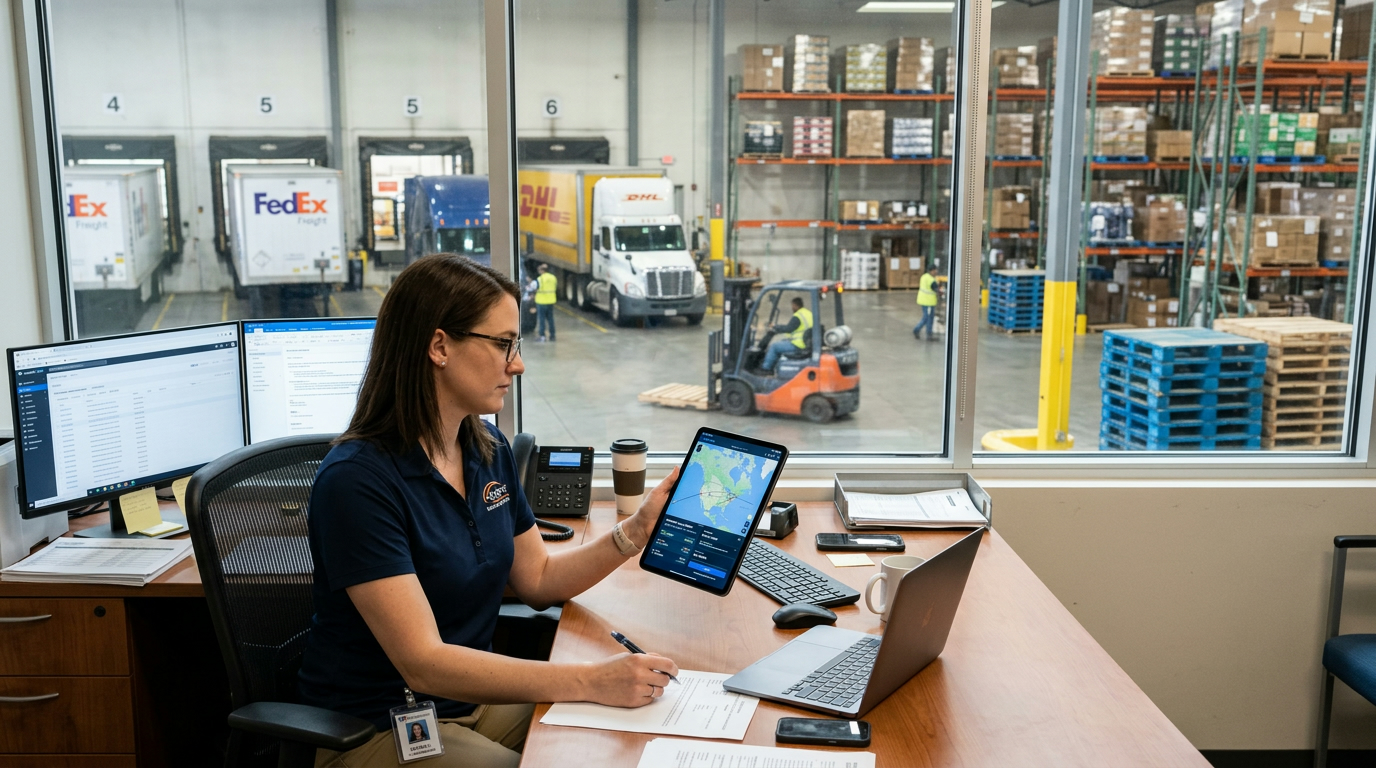
The Hidden Cost of Juggling Multiple Vendors
If you are running procurement or operations for a business that imports regularly from China, you already know the pain of coordinating separate parties for freight booking, customs clearance, trucking, and warehouse delivery. One stop logistics China to Malaysia means a single point of contact manages the entire chain from your supplier’s factory in China to your warehouse door in Malaysia, instead of you chasing updates from three or four different vendors every week.
For operations directors managing shipment volume out of Petaling Jaya or Glenmarie, this is not a theoretical convenience. It is the difference between spending an afternoon reconciling conflicting status updates from a freight agent, a customs broker, and a local trucker, versus sending one message to one person who already knows where your container is.
What a Single PIC Actually Changes
A dedicated Person In Charge, or PIC, is not just a sales contact who disappears after the booking is confirmed. A proper single PIC model means the same person or team tracks your shipment from the moment it leaves the China origin warehouse, through sea or air transit, through Malaysian customs clearance, and into final delivery at your facility.
This matters most when something goes wrong. If a container is flagged for inspection, or a document mismatch delays release at port, you do not want to be the one relaying messages between a shipping line, a broker, and a transport company. A single PIC who already understands your shipment history, your product category, and your usual clearance pattern can resolve the issue faster because they are not starting from zero.
Factory managers who have compared this to managing multiple vendors directly often describe the same shift: fewer status-check emails, fewer surprises at the warehouse door, and a clearer sense of accountability when timelines slip.
Where Multi-Vendor Coordination Breaks Down
Most importers do not start with a single PIC setup. They start by booking freight with one company, hiring a customs agent separately, and arranging local delivery through whichever trucking contact is available that week. This works reasonably well when shipments are small and infrequent.
It stops working once volume increases. A retailer with frequent container arrivals, or a live stream seller restocking weekly, cannot afford the coordination gaps that come from three separate parties who do not share information with each other. One of the most common failure points is exactly this kind of handoff gap, which is why documentation and customs clearance errors remain such a frequent cause of delay for importers managing their own vendor chain.
The other common breakdown is timeline visibility. When freight, customs, and trucking are handled by separate companies, nobody owns the full picture. If you want to understand how a coordinated model avoids this, it helps to look at how delays actually happen in China to Malaysia shipping and where a fragmented vendor chain tends to lose time.
Why This Matters More for Klang Valley Import Volume
Businesses operating out of Kuala Lumpur, Petaling Jaya, and the Glenmarie industrial zone tend to share a specific profile: repeating shipment cycles, tight warehouse turnaround, and limited internal headcount dedicated purely to logistics coordination. A factory manager already stretched across production scheduling does not have time to also manage three vendor relationships for every inbound container.
A single PIC model is built for exactly this situation. Instead of your team absorbing the coordination burden, the PIC absorbs it. They track the shipment through the full process described in how a China to Malaysia freight forwarder manages shipments, and they are the one who flags issues before they become warehouse-floor emergencies.
This also changes how clearance issues get handled. When the same team manages freight and customs together, they can usually catch a documentation gap before it reaches port, rather than discovering it after the container has already arrived and is sitting idle.
What to Ask Before You Switch
Not every forwarder that advertises end-to-end service actually delivers a single point of contact. Some simply subcontract each leg to a different partner and relabel it as one stop logistics China to Malaysia. Before switching, ask directly who handles your shipment if a clearance issue comes up on a weekend, whether the same PIC stays assigned across repeat shipments, and how they report status between booking and delivery.
It also helps to understand the full process you are buying into, not just the pitch. A practical overview of China to Malaysia freight forwarder services or a step-by-step walkthrough of how importing from China to Malaysia actually works will tell you whether a provider’s claimed one stop model matches what actually happens shipment to shipment.
If you are currently managing multiple vendors yourself and considering a switch, the clearest signal is simple: ask how many people you would need to contact if your next shipment hits a customs query. If the answer is more than one, it is not really a single PIC model yet.
FAQ
What does one stop logistics actually include for a China to Malaysia shipment?
In practice it covers freight booking and transit management, customs clearance coordination, and final delivery to your warehouse, all tracked by the same contact person rather than handed off between separate vendors.
Is a single PIC model only useful for large shipment volumes?
It becomes most valuable once shipments are frequent enough that coordination overhead starts costing real time, which is typically the case for businesses with repeating restock cycles rather than occasional one-off orders.
How do I know if a forwarder is really offering one PIC versus just marketing language?
Ask whether the same contact stays assigned across repeat shipments and who specifically handles issues outside normal business hours. If the answer involves multiple handoffs, it is not a true single PIC setup.
Does a single PIC model reduce customs clearance delays?
It does not eliminate clearance checks, but it often catches documentation issues earlier because the same team managing freight also manages customs, rather than discovering mismatches after the shipment already arrives at port.