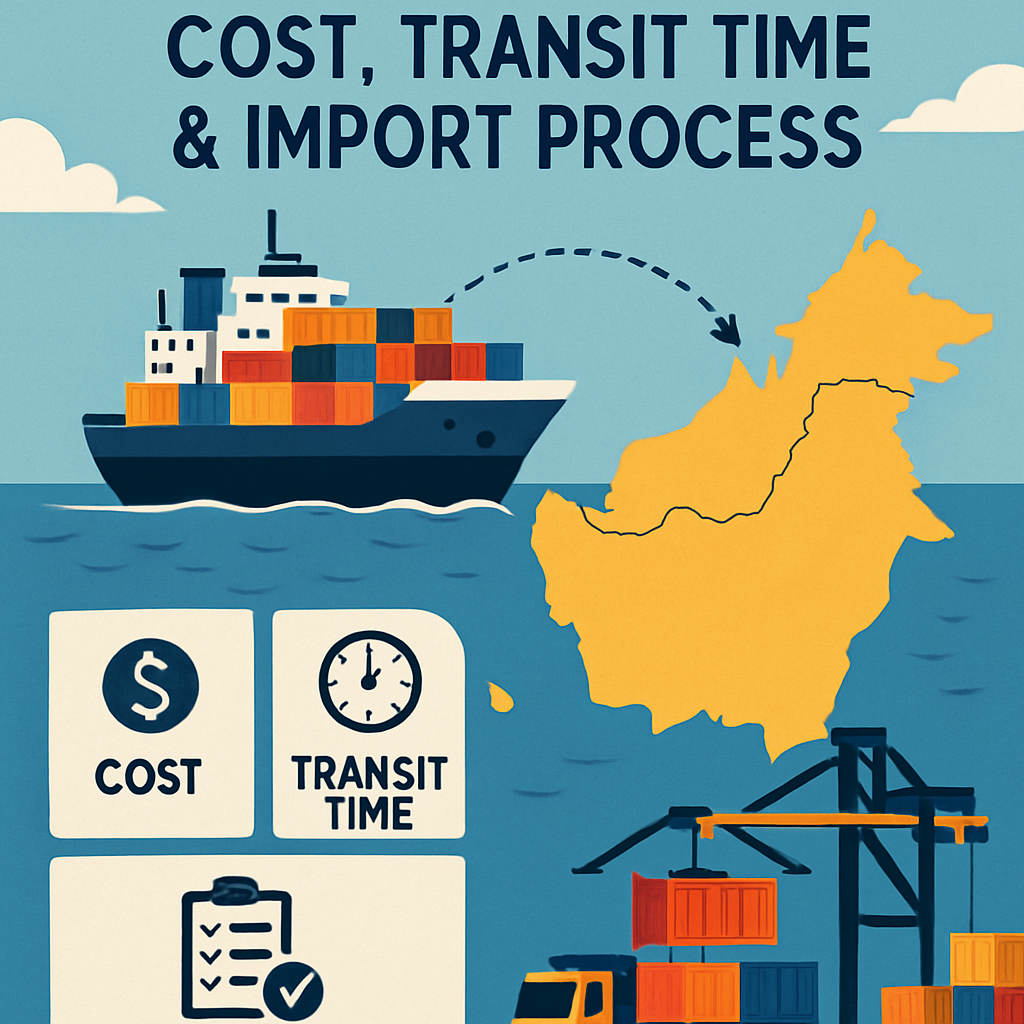
Sea Freight to East Malaysia: Cost, Transit Time & Import Process
A How-to-Guide for Small Business Owners
Are you a small business owner seeking to extend your market reach or streamline logistical operations in Malaysia? The journey from West Malaysia to the eastern states—Sabah and Sarawak—requires a reliable, cost-efficient, and regulatory-compliant shipping strategy. Sea freight to East Malaysia is not just the logical choice; it’s the backbone of commerce across the South China Sea.
This comprehensive guide unpacks everything you need: from analyzing shipping costs, demystifying transit times, navigating import processes, to actionable advice that removes the guesswork from ocean shipping Malaysia. Real case studies, in-depth explanations, and expert tips are included to ensure you’re equipped for success.
Why Choose Sea Freight to East Malaysia?
East Malaysia—encompassing Sabah and Sarawak—represents a substantial business opportunity. With fast-growing populations, resource-based industries, and expanding consumer demand, these regions are increasingly on the radar for SMEs. Yet, the geography—a 600 kilometer expanse of ocean separating these states from Peninsular Malaysia—means logistics require specialized solutions.
Main Advantages of Sea Freight
- Cost-Effectiveness for High Volume Loads: For shipments exceeding 150 kilograms, sending cargo by sea is often five to ten times less expensive than air freight, especially when shipping bulky or heavy goods.
- Capacity for All Cargo Types: From raw materials and machinery to retail and perishable products, sea freight supports a wide range of shipment types via general, refrigerated, and even hazardous goods containers.
- Regular and Reliable Schedules: There are daily and weekly departures from major West Malaysian ports to Sabah and Sarawak, reducing lead times and providing flexibility in scheduling.
- Environmental Impact: Sea shipping has a lower carbon footprint per unit than air or road freight, supporting sustainability initiatives increasingly valued by modern businesses.
Example
A Penang-based furniture manufacturer expanded distribution to Kota Kinabalu and Kuching. By switching from air to sea freight, logistics costs dropped by 65%, facilitating a competitive retail price and unlocking market share in East Malaysia.
Understanding the Sabah & Sarawak Sea Freight Landscape
Choosing the right entry point for your goods is critical. Both Sabah and Sarawak have multiple sea ports, each with its own advantages depending on your cargo destination and distribution plan.
Main Ports of Entry
Sabah Sea Freight Hubs
- Kota Kinabalu Port: Central location, excellent for serving the state’s capital and interior.
- Sepanggar Bay Container Port: Handles most containerized cargo; equipped with modern facilities for efficient handling.
- Sandakan Port: Key for exports and imports related to palm oil, timber, and agro-products.
- Tawau Port: Southeast Sabah’s trade hub, often used for goods headed to the border region or as transshipment.
Sarawak Sea Freight Hubs
- Kuching Port: Gateway to Sarawak’s capital and the southern region, also equipped for passenger logistics.
- Bintulu Port: Malaysia’s third largest port, ideal for bulk cargo and energy-related exports and imports.
- Sibu Port: Best suited for central Sarawak and riverine supply chains.
- Miri Port: Main access point for northern Sarawak, including the oil & gas corridor.
Port Selection Tips
- Direct arrival at the nearest port reduces inland delivery costs and speeds up distribution.
- Consider the port’s specialization: e.g., Sepanggar Bay for containerized cargo; Bintulu for bulk.
- Check port congestion trends; busy periods (such as harvest seasons) can cause delays.
Example
A food importer from Selangor diversified by targeting smaller towns in Sarawak. By shipping directly to Sibu Port, they halved their inland transport distance, saving both cost and delivery time compared to distribution from Kuching.
Cost Factors: What Influences Sea Freight Rates to East Malaysia?
Understanding the cost structure of sea freight East Malaysia is vital for budgeting and profit planning. The final price you pay comprises several components, which you can manage or optimize with the right knowledge.
Main Components of Sea Freight Charges
- Freight Rate:
The base shipping cost. For FCL (Full Container Load), you pay a flat rate per container; for LCL (Less than Container Load), it’s per cubic meter (CBM) or per 1,000 kilograms, whichever is higher. - Bunker Adjustment Factor (BAF):
A surcharge reflecting fluctuating fuel costs imposed by shipping lines. - Terminal Handling Charges (THC):
Levied for handling containers at both origin and destination ports. - Documentation Fees:
Charged for preparing shipping documents such as the bill of lading and other regulatory paperwork. - Port Charges & Wharfage:
Costs for container storage, security, and usage of port facilities. - Inland Haulage:
For cargo delivery from port to the final destination (e.g., your warehouse or retail outlet). - Other Surcharges:
Includes congestion surcharges during peak periods, currency adjustment factors, and, if applicable, hazardous cargo surcharges.
Sample Sea Freight Rates (Q1 2024)
- Port Klang (West Malaysia) to Kuching (Sarawak):
- 20ft FCL: RM 2,600 – RM 3,500
- 40ft FCL: RM 3,900 – RM 5,200
- LCL: RM 260 – RM 360 per CBM (minimum charge typically 2-3 CBM)
- Penang to Kota Kinabalu (Sabah):
- 20ft FCL: RM 2,800 – RM 3,800
- 40ft FCL: RM 4,100 – RM 5,400
Note: Rates may vary with market conditions, type of cargo, and shipment urgency. Obtaining quotes from at least three Sabah sea freight or Sarawak sea freight agents is recommended for the best deal.
Case Study: Managing Costs with Volume
A start-up electronics distributor in Johor initially shipped LCD panels to Kuching via LCL at RM 300/CBM. As orders increased, they consolidated into an FCL, lowering the effective shipping cost per unit by 28%, and gained priority unloading at Kuching Port due to the full container status.
Transit Times: How Long Does Sea Freight Take from West to East Malaysia?
Timely delivery is crucial for inventory management and customer satisfaction. Your shipment’s journey across the sea involves several stages, each impacting the total transit time.
Average Sea Freight Transit Times
| Origin (West Malaysia) | Destination (East Malaysia) | Transit Time (Port-to-Port) |
|---|---|---|
| Port Klang | Kota Kinabalu (Sabah) | 3–5 days |
| Port Klang | Kuching (Sarawak) | 2–4 days |
| Penang | Bintulu (Sarawak) | 4–6 days |
Additional Considerations:
- Add 1–2 days for pre-shipment preparation and documentation at the port of origin.
- Customs clearance can take 1–3 days, longer if documents are incomplete or during holiday peaks.
- Inland destination delivery from the port ranges from same day (for urban areas) to an additional 2 days for rural/remote destinations.
Example: Impact of Port Location on Delivery
An FMCG (Fast Moving Consumer Goods) supplier delivered goods from Port Klang to Sandakan for distribution in Sabah’s east coast. Although transit times were quoted as 4–5 days, routing through Kota Kinabalu first, followed by coastal barge transfer, added 2 days compared to a direct call at Sandakan Port.
Pro Tip
During Gawai Dayak or Hari Raya, average port dwell times increase by up to 50%. Factor holiday schedules into planning to avoid inventory shortfalls.
Step-by-Step Import Process: Sea Freight East Malaysia
Irrespective of your cargo type or shipment scale, a clear understanding of the import process can help you avoid costly delays and gain a competitive advantage.
1. Classify Your Goods & Ensure Compliance
- HS Code Identification:
Determine your product’s Harmonized System code, which governs customs duty rates and required documentation. - Import Permits & Approvals:
Certain products need import licenses—especially food/beverages, electronics, cosmetics, and chemicals. East Malaysian states may require their own permits even if you possess national approval.
Example
A Penang-based seafood exporter lost a major contract in Sarawak after shipments were held due to missing state-specific veterinary permits—highlighting the need for thorough regulatory checks beyond federal approval.
2. Choose the Right Freight Forwarder
- Local Expertise:
Select a provider with demonstrated knowledge in Sabah sea freight or Sarawak sea freight logistics and customs processes. - Service Flexibility:
Can they handle FCL, LCL, refrigerated, or out-of-gauge cargo? Do they provide door-to-door or port-to-port services? - Transparent Pricing:
Insist on a detailed breakdown to avoid hidden fees.
Best Practice
Request references from other SMEs in similar sectors and regions. A reputable agent should freely share case studies or client testimonials.
3. Arrange Pickup and Shipping Space
- Confirm with your supplier that the cargo is ready and packed according to shipping standards.
- Make booking via your freight forwarder, who will liaise with the shipping line and allocate your space on the next available vessel.
4. Prepare Shipping Documents
- Commercial Invoice
- Packing List
- Bill of Lading
- Certificate of Origin (if your business claims preferential tariffs under a trade agreement)
- Product Permits
- Insurance Certificate (optional, but highly recommended for high-value items)
5. Customs Clearance at Port of Origin
- Customs will check your documents and may physically inspect cargo before allowing export.
- Any discrepancies can delay shipment or even lead to costly penalties.
Example
A rubber glove exporter expedited customs clearance by pre-submitting an electronic manifest and paying pre-clearance fees, achieving same-day port processing and faster vessel loading.
6. Sea Transit and Cargo Tracking
- Utilize your forwarder’s tracking portal to monitor cargo status, receiving alerts for departure, transit, and arrival milestones.
7. Arrival and Import Clearance at East Malaysian Port
- Upon vessel arrival, your forwarder or appointed customs broker will:
- Prepare import declaration (K1 form for Malaysia)
- Submit documentation to state/federal customs
- Pay applicable duties, SST (Sales and Service Tax), and port handling fees
- Coordinate unloading and release of your shipment
8. Inland Delivery
- Depending on your arrangements, cargo may be trucked directly to your business location or routed through distribution centers.
- Verify delivery checklists with your forwarder to ensure completion and resolve any issues (damage, loss, mis-shipment) immediately.
Must-Know Import Regulations for Sabah & Sarawak
East Malaysia’s autonomous administration over certain areas means import procedures differ from those in West Malaysia. Not knowing these differences can lead to delays, additional costs, or even cargo seizure.
Key Regulatory Differences
- Separate Import Licenses:
East Malaysia often requires state-issued permits for food products, petroleum-based goods, and certain machinery—even when national permits have been obtained. - State Customs Declarations:
Cargo destined for Sabah or Sarawak must file an additional declaration under state customs, subject to their evaluation for admissibility and documentation adequacy. - Restricted or Prohibited Goods:
Items legal in Peninsular Malaysia may be controlled or banned in East Malaysia, including fireworks, alcohol, and certain types of livestock.
Duties & Taxation
State import duties mostly align with national rates; however, exemptions or additional surcharges apply for specific product categories. Always consult the official MyCustoms portal or a reputable local agent for the latest rates and rule updates.
Example
A Johor-based alcohol distributor faced RM 80,000 in losses when a shipment of wine was held at Kuching Port due to a missing Sarawak-specific import license, even though all federal permits were obtained.
Checklist Before Shipping
- Secure both federal and East Malaysian state permits for regulated products.
- Double-check state-level requirements for packaging, labeling, and product documentation.
- Engage customs brokers or forwarders with a proven record in Sabah/Sarawak logistics.
FCL vs LCL: Which Shipping Option Fits Your Business?
Knowing when to upgrade from LCL to FCL, or vice versa, can make or break your logistics budget and efficiency.
| Aspect | FCL (Full Container) | LCL (Less than Container) |
|---|---|---|
| Volume | >15 CBM / Full Container | <15 CBM / Shared Container |
| Cost Efficiency | Lower per CBM for high volume | Higher per CBM |
| Handling Risk | Lower—your own cargo | Higher—mix of shippers |
| Transit Speed | Often direct, faster | Possibility of delays when consolidating/deconsolidating multiple shipments |
| Flexibility | Fixed container size | Adaptable for irregular/small shipments |
| Best For | Wholesale/Bulk orders | Small businesses, test runs |
Case Study: Upgrading from LCL to FCL
Ahmad, owner of “Borneo Arts,” began exporting Sarawak handicrafts using LCL to gauge market demand. As orders grew past 16 CBM per shipment, he shifted to FCL. Result:
- Saved RM 1,400 per trip in consolidated shipping costs
- Noticed a one-day reduction in delivery timelines due to elimination of multiple cargo checks
- Reported a drop in damage rates thanks to less handling
When LCL Is Still Best
Start-ups or SMEs testing East Malaysia’s market can minimize risk and inventory exposure by choosing LCL, scaling up as time and demand grow.
Practical Tips to Optimize Your Sea Freight Experience
Success in Sabah sea freight or Sarawak sea freight doesn’t come from hard negotiation alone, but from applying proven strategies to save time, money, and frustration.
1. Plan and Book in Advance
- Peak Season Surcharge:
Plan shipments