Top Ports in Malaysia for Sea Freight Imports: An Infographic Guide for Corporate Professionals
Malaysia sits at the crossroads of international shipping routes, especially along the crucial Straits of Malacca—a fact that elevates its ports to global significance. For corporate professionals involved in international logistics, sourcing, procurement, and supply chain optimization, knowing the landscape of Malaysian ports for sea freight isn’t just beneficial—it’s a game-changer. This comprehensive, infographic-style guide goes beyond the basics, delivering data-rich insights, relatable scenarios, and actionable strategies to help businesses harness the full potential of Malaysia’s world-class seaports.
Malaysia as a Maritime Powerhouse: An Overview
Malaysia has earned its maritime prestige through strategic investments, visionary port management, and a relentless commitment to global connectivity. Its ports consistently rank among the busiest in Southeast Asia and the world, making them vital cogs in the machinery of international trade.
Key Facts & Figures on Malaysian Ports
- 4th Largest Maritime Nation in Southeast Asia: Malaysia’s ports outpace many regional peers, attracting multinationals and regional manufacturers alike.
- Port Klang: 11th busiest container port globally, handling over 14.6 million TEUs in 2023.
- Cumulative Port Throughput (2023): Over 29.2 million TEUs collectively by major Malaysian ports.
- Economic Impact: The port sector contributes significantly to Malaysia’s GDP, supporting industries from electronics assembly to automotive manufacturing.
Industry Insight
When a leading European appliance manufacturer shifted its inbound operations from Singapore to Malaysian ports, it realized a 17% reduction in overall transit times, and their logistics costs dropped by 13%. Additionally, supply chain resilience improved, as the company gained access to alternative routing and transshipment options during peak and disruption periods.
Did You Know?
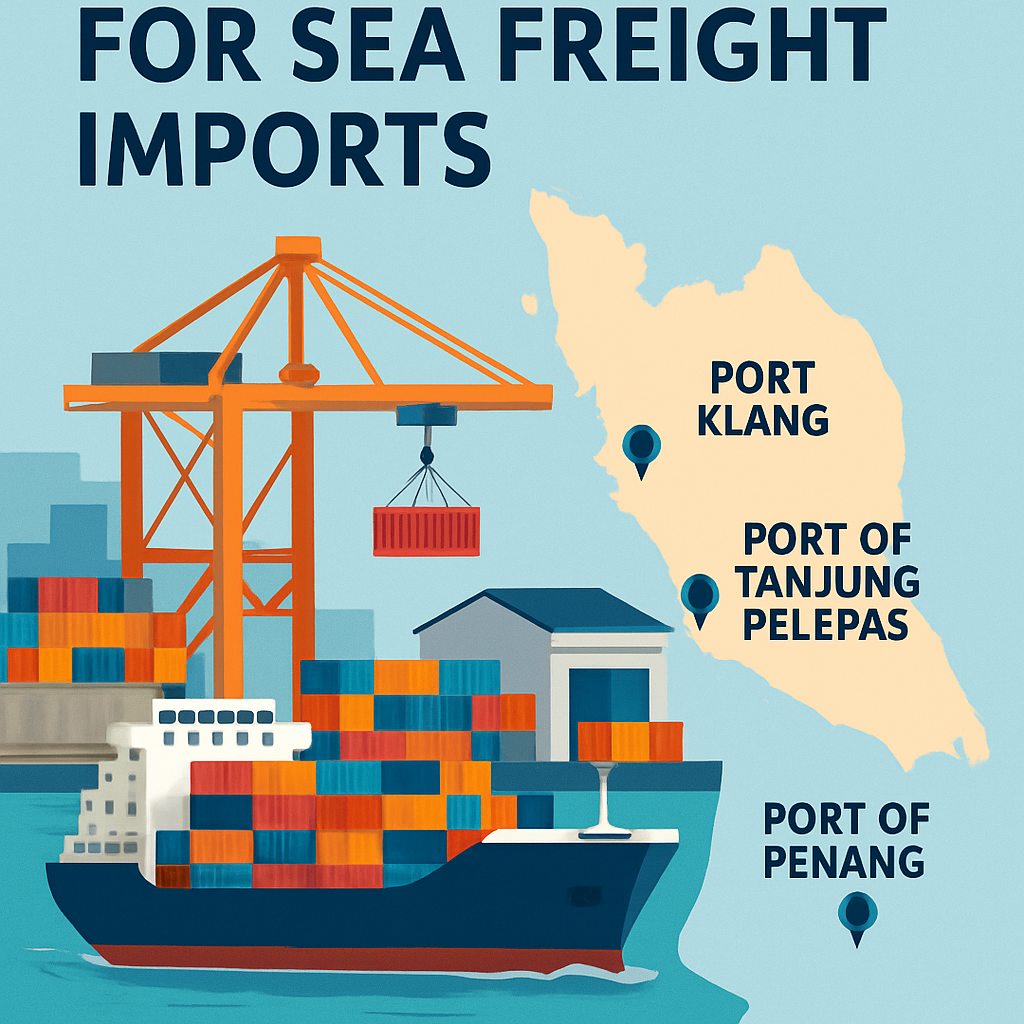
- Malaysia’s major ports—Port Klang, Penang Port, Johor Port (Pasir Gudang), and Tanjung Pelepas (PTP)—are all equipped to handle vessel calls from leading global carriers, ensuring unrivaled schedule reliability and reach.
The Big Three: Malaysia’s Top Sea Freight Ports
Port Klang: The Unrivaled Container Titan
Strategic Position and Capacity
- Location: Approximately 38 km west of Kuala Lumpur, connected to the country’s dense road and rail networks.
- 2023 TEU Throughput: 14.6 million, cementing its global significance.
- Terminals: Northport, Westports, and Southpoint drive capacity and efficiency.
Strengths and Strategic Value
- Exceptional Connectivity: Direct liner services to over 120 countries and 600 ports.
- Port Klang Logistics Infrastructure: Inland container depots, high-capacity cold storage, and more.
- Automation and Innovation: Smart cranes, automated yard management, and blockchain for document clearance.
- Proximity to Manufacturing Hubs: Fast distribution to Malaysia’s economic heartland in Selangor.
Real-World Examples
Case Study: Western Electronics Co.
A US-based consumer electronics brand re-engineered its Asia import pipeline by shifting all inbound sea containers through Port Klang. This move cut customs clearance times by 27% and saved USD 2 million annually through inventory optimization.
FMCG Importer Advantage
Malaysia’s largest supermarket chain uses Port Klang’s 24/7 Westports terminal for temperature-controlled imports, improving freshness while reducing spoilage and delivery windows.
Practical Tips for Port Klang Logistics
- Advance Slot Booking: Book shipping slots and customs clearance four weeks in advance.
- Customs Automation: Utilize e-Port or digital “single window” for processing time reduction.
- Consolidation Hubs: Choose among many 3PLs at Port Klang for LCL shipments.
Penang Port: The Northern Gateway to ASEAN
Strategic Position and Capacity
- Location: Penang Island, with bridge access to the mainland and southern Thailand.
- 2023 TEU Throughput: 1.7 million.
- Infrastructure: Deepwater Wharves, Butterworth Container Terminal, Prai Bulk Cargo Terminal.
Standout Features
- Shipping Specialties: Electronics, reefer, and agricultural products.
- Northern Free Commercial Zone: Duty exemptions and seamless transshipment support.
- Multimodal Connectivity: Strong rail and road links across northern Malaysia and into Thailand.
Client Wins and Illustrative Scenarios
Swiss Medical Tech Fast-Track
By switching to Penang, a Swiss distributor cut delivery times by 36 hours and used the “Cargo Expresso” fast-lane program for urgent shipments.
Northern Manufacturing Boom
Japanese firms import via Penang to ensure non-stop factory production using reefer containers for temperature-sensitive parts.
Shipping Actionable Guidance
- Express Clearance: Use fast-track customs channels with a local agent.
- Utilize Rail Freight: Move bulk/containerized goods efficiently throughout Malaysia and Thailand.
- Cross-Border Trade: Take advantage of direct trucking and rail corridors for quick access to Thailand.
Johor Port: The Southern Trade Powerhouse
Strategic Position and Capacity
- Location: Pasir Gudang, close to Singapore and part of Iskandar Malaysia development.
- 2023 TEU Throughput: 1.2 million.
- Facilities: Multi-cargo terminals and bonded storage for automotive and chemicals.
What Sets Johor Port Apart
- Freight Specialties: Palm oil, edible oils, chemicals, and automotive parts.
- Logistics Ecosystem: Near Free Industrial Zones and supporting JIT manufacturing.
- Regional Distribution: Truck/barge to Singapore and fast regional access.
Corporate Use Cases
Japanese Car Manufacturer
Shifted supply chains to Johor Port, cutting truck idling and saving on inventory costs through bonded warehousing and JIT delivery.
Agri-Chem Enterprise
Now imports fertilizers via Johor’s liquid bulk facilities, improving tracking with IoT and saving on storage/blending costs.
Optimizing Johor Port Freight
- Bonded Storage: Defer duties until stock is dispatched.
- Integrated JIT Services: Use port-operated VMI and fence-side delivery models.
- Singapore Connections: Seamless truck/barge flows between Johor and Singapore.
Supporting Players: Other Vital Malaysian Ports
Tanjung Pelepas (PTP): Transshipment Giant
- Location: Opposite Singapore, deepwater and high-capacity port.
- 2023 Throughput: 10.6 million TEUs.
- Clients: Maersk and major liners for transshipment and feeder services.
- Infrastructure: Handles 20,000+ TEU container vessels.
Strategic Edge: low dwell times and full Maersk Inland Services integration for multimodal shipping.
Kuantan Port: Eastern Malaysia’s Bulk and Project Cargo Hub
- Location: East coast, facing South China Sea.
- Specialization: Bulk (bauxite, ore), project cargo, and ECER industries.
Use Case: Australian miners import directly to ECER plants via Kuantan for reduced inland logistics layers.
How to Choose the Right Malaysian Port for Your Business
Port Comparison Table
| Criteria | Port Klang | Penang Port | Johor Port | PTP | Kuantan Port |
|---|---|---|---|---|---|
| 2023 TEU Capacity | 14.6 million | 1.7 million | 1.2 million | 10.6 million | N/A |
| Strengths | FMCG, automation, global links | Electronics, cold chain, ASEAN gateway | Industrial cargo, JIT, auto | Transshipment, liner connectivity | ECER projects, bulk cargo |
| Road/Rail Connections | Extensive | Excellent north routes | Direct to Iskandar, Singapore | Moderate | Good (internal routes) |
| Customs/Free Zones | Yes | Yes | Yes | Yes | Yes |
| Industry Clusters Nearby | High | High (Bayan Lepas) | Very High | High | Moderate |
Step-by-Step Port Selection Strategy
- Supply Chain Mapping: Assess origin points, supplier networks, and pace of goods movement.
- Cargo Type: Sensitive or hazardous goods may require specialized ports.
- Frequency & Flexibility: High volume? Choose ports with frequent mainline visits.
- Customs & Value-Added Services: Ports with bonded warehousing, single-window customs save time/money.
- Risk Mitigation: Always have a second port for peak disruptions or allocations shifts.
Port Selection Example
Case 1: High-tech manufacturer inbound from China to central Malaysia → Choose Port Klang (primary), Penang Port (backup).
Case 2: Food retailer from ASEAN to north Malaysia → Use Penang Port for perishables, Port Klang if volume surges.
Trends and Innovations in Malaysian Port Logistics
Major Developments
- Automation & Robotics: Deployment of automated stacking cranes in PTP and Klang boosts throughput and quality.
- Digital Customs: “Single window” clearance saves up to 35% in documentation time.
- Green Shipping: LNG bunkering, shore-to-ship power, and ESG performance tools now common.
- IoT & Visibility: End-to-end container tracking promotes real-time logistics and analytics.
Innovation in Action
Danish Pharma Group: By using Port Klang’s IoT-enhanced cold chain service, spoilage fell 80%. Visibility and live alerts helped intercept failures in real-time.
Illustrative Case Studies: Malaysian Ports in Corporate Import Success
Case Study 1: FMCG Success with Port Klang
- Company: AsiaFoods Ltd.
- Problem: Customs bottlenecks in Southeast Asia impacted SLAs.
- Solutions: E-customs use via Port Klang and inland rail to Johor distribution center.
- Outcomes: 98% on-time rate, 18% lower inventory cost, 20% customer satisfaction improvement.
Case Study 2: Electronics Importer Leverages Penang Port
- Company: TechNova
- Issue: Temperature-sensitive goods were degrading in transit.
- Actions: Shifted to Penang Port for cold storage and fast customs.
- Results: Loss rate down by 70%, landed cost reduced by 10%, and time-to-market improved.
Case Study 3: Johor Port Powers Automotive Supply Chain
- Company: AutoGlobal SE Asia
- Challenge: CKD kit delays and excess tax/duty costs.
- Solutions: Feeder route from Shanghai, bonded warehousing, Singapore rerouting capability.
- Results: 24% efficiency gain, 5% less financial stress due to deferred compliances.
Actionable Takeaways for Corporate Import Managers
- Advance customs planning—especially during festivals or global demand peaks.
- Use bonded facilities, defer duties, embrace free zone tax benefits.
- Activate multimodal potentials—rail, sea, road combined routing.
- Trust local expertise—deploy agents, consultants, 3PLs stationed near ports.
- Pre-negotiate secondary port rates—to pivot rapidly during congestion.
- Track metrics continuously—optimize lead times, storage, landed costs.
- Go digital—IoT, blockchain, EDI can differentiate fast movers from laggards.
Infographic Overview: Match Your Import Needs to the Best Malaysian Ports
| Port | 2023 TEUs | Unique Strengths | Ideal For | Support Keywords |
|---|---|---|---|---|
| Port Klang | 14.6 million | Automation, global lines, logistics hub | FMCG, electronics, bulk, high-value cargo | Port Klang logistics |
| Penang Port | 1.7 million | Northern axis, cold chain, multimodal | Electronics, food, pharma, cross-border trade | Penang Port shipping |
| Johor Port | 1.2 million | Industrial adjacency, JIT, auto | Chemicals, palm oil, JIT, auto components | Johor Port freight |
| PTP | 10.6 million | Transshipment, mainline carrier hub | Global/multinational liner, rapid transshipment | |
| Kuantan Port | N/A | Bulk/project cargo, east coast access | Heavy industry, bauxite, minerals, ECER |
Conclusion
Malaysia’s ports, with their multifaceted capabilities and strategic positions, are pivotal for international corporations seeking reliable, efficient, and scalable sea freight gateways in Asia. Whether optimizing for cost, speed, risk resilience, or sustainability, understanding the nuances of Malaysian ports for sea freight—from the world-ranked Port Klang logistics hub, to Penang Port shipping expertise, and Johor Port freight for industrial and automotive supply—allows businesses to craft world-class import solutions.
Corporate professionals who proactively engage with local partners, embrace innovation, and stay nimble in their port strategies stand to gain not just a logistical advantage, but a powerful platform for global growth.
Interested in a customized port analysis or want to optimize your Malaysian import operations further? Engage with an experienced logistics partner or port